

About
About Us
Learn More
Trapping
Caring for Cats in Traps

Your gift means food, shelter and veterinary care for cats in need.
Using traps as cages
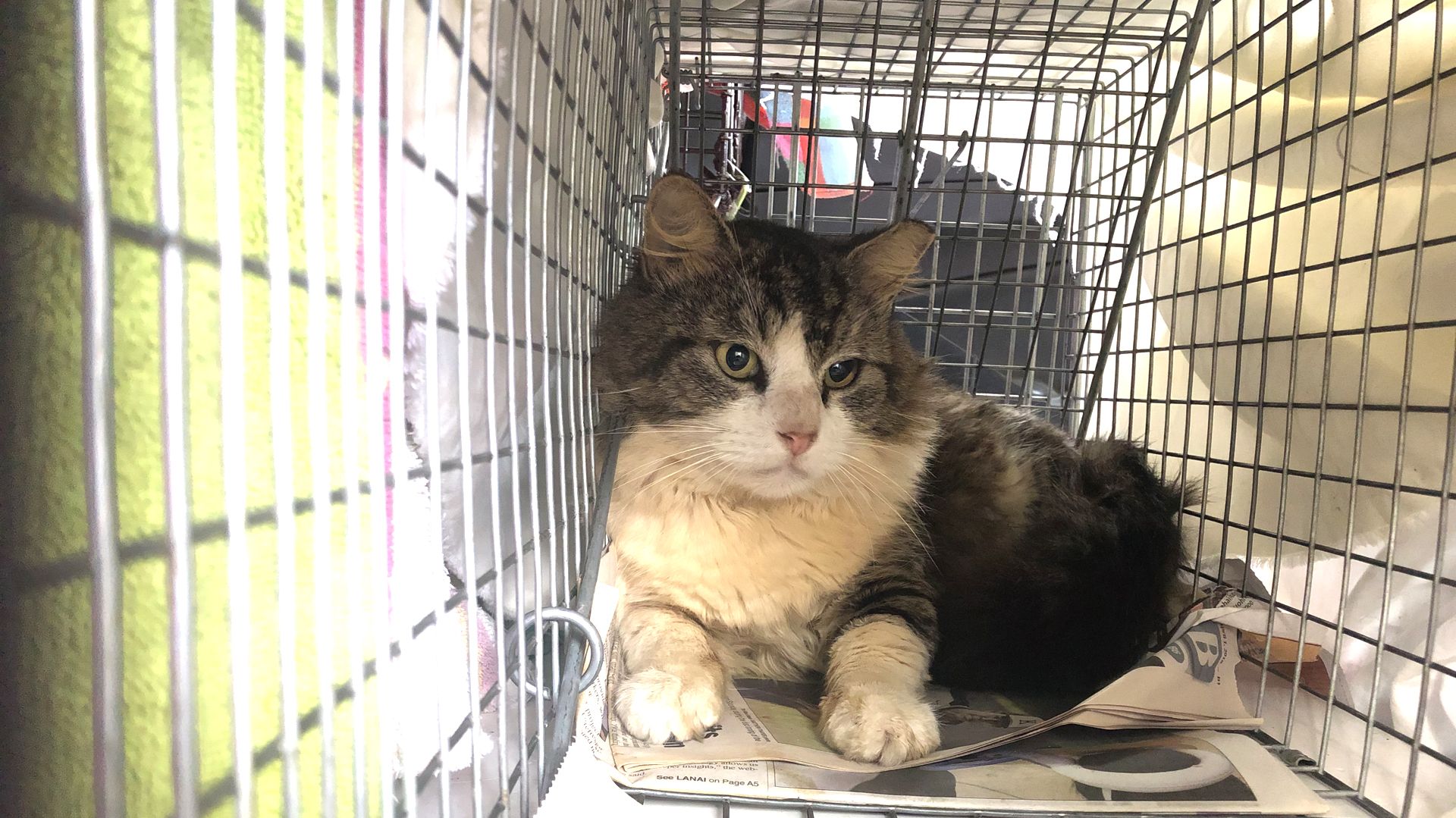
Once cats are trapped for TNR, they need to be confined while waiting for surgery and then for a period of recovery. The safest and most efficient way to hold them is in their traps rather than transferring them into pop-up crates or steel bank cages. The cat exits the trap only for surgery after being sedated and upon release back into his territory. Using traps for holding eliminates the risk of a cat escaping or staff or volunteers being injured during transfers into and out of a cage. Traps also take up less space and reduce equipment costs for performing TNR. Cats are fed and traps cleaned twice daily using the methods demonstrated in the video below:
What you'll need
Traps should be at least 30 inches (76 cm) in length and have a sliding or guillotine-style rear door, allowing access to both the front and back of the trap. A pair of trap dividers is needed to cordon off the cat on one end while the trap is opened on the other. For safety, the dividers should be wider than the trap and made of steel. For a checklist of supplies and step-by-step written guide to feeding and cleaning, download our Caring for Cats in Traps handout.
The holding space where the cats in traps are kept should be warm (at least 65 degrees Fahrenheit), dry and secure. Unless it can be hosed off, protect the floor by covering it with a plastic drop cloth at least 3mm thick. If craft tables are available, place the traps on top of them - having the traps raised off the floor will make the work go faster.
Flea infestations are rare, but to avoid the possibility, clean the floor thoroughly after the cats are released. To be extra cautious, treat the cats with a fast-acting flea medication like Capstar by putting it in their first meal after they've been captured.
Typically, being in a trap for several days does not cause cats to suffer undue stress. They tend to adapt, relax, and eat and eliminate normally. If a must be held for substantially longer than the normal TNR process, such as for treatment of illness or injury, transfer to a cage and, for ferals, use the setup described in Fostering Feral Cats Safely.