

About
About Us
Learn More
Colony Care
Feeding

Your gift means food, shelter and veterinary care for cats in need.
Best practices
Feeding often forms the bond between community cats and their caretakers. Seeing and responding to hungry cats is how so many of us get involved with them in the first place. What kind of food is provided, when the cats are fed and where, can strengthen that bond and help keep the cats safe and healthy.
What kind of food?
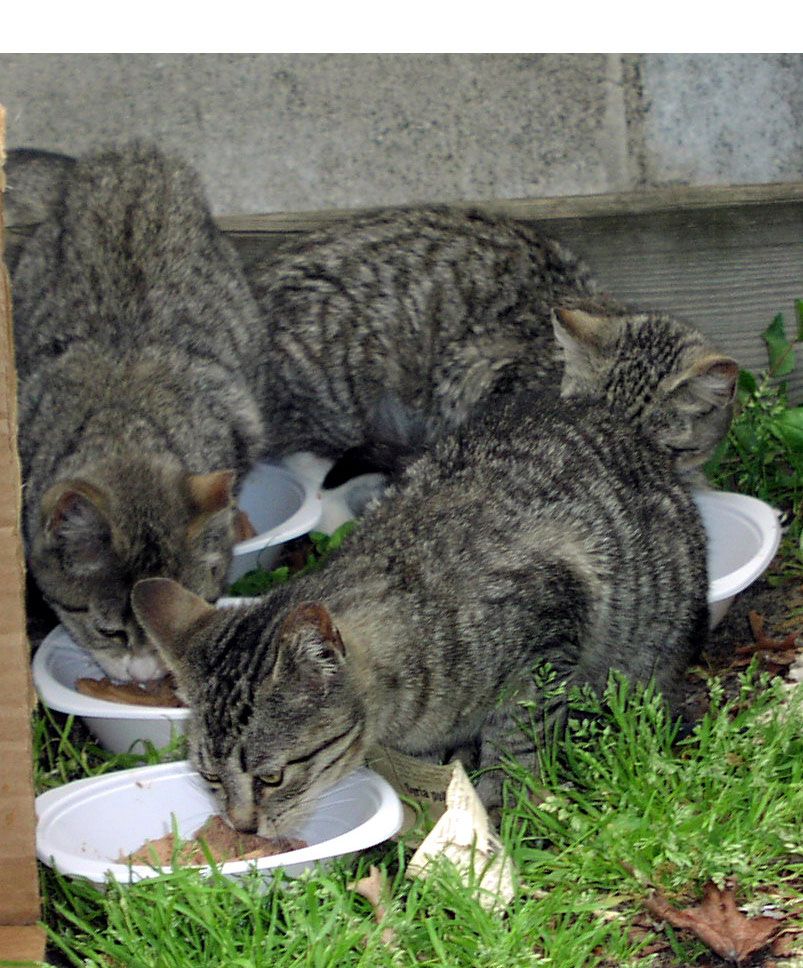
Our answer is, "the best you can comfortably afford." If you're feeding a few cats in your backyard and it's no sacrifice to buy high quality canned food, that's great. If you're feeding 20 cats and on a tight budget, an affordable, good quality dry food, supplemented with wet when you can, may work best.
To learn what's in food, check the ingredients label - they're listed in order of volume. Generally speaking, whole meats are more nutritious than by-products or grains. For specific brands to consider to fit your budget, see What is the Best Cat Food for Feral Cats on Cats.com.
Feeding patterns
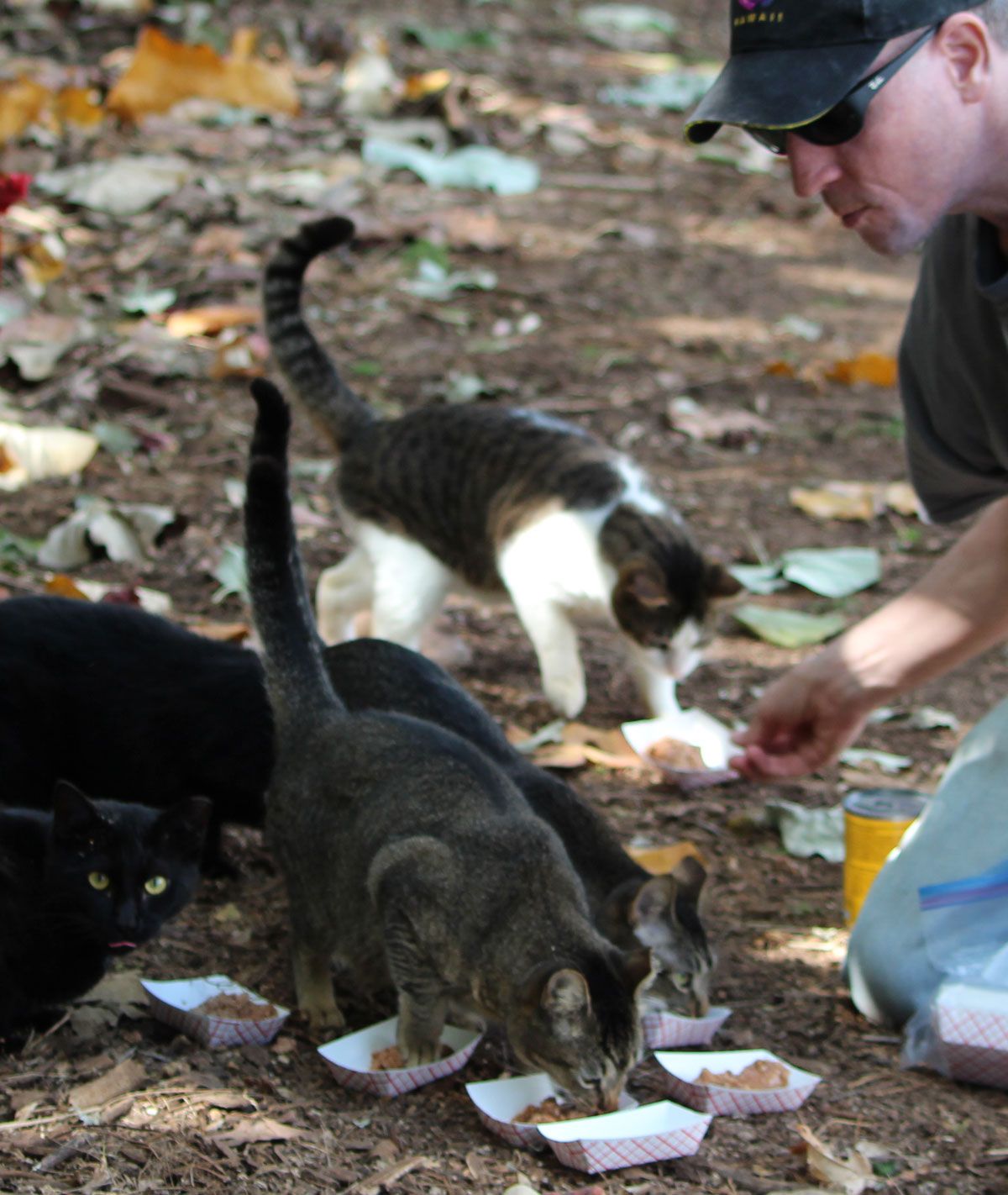
Cats are habitual creatures who quickly learn when their meals arrive and will gather at the feeding spot beforehand. Create this kind of routine by feeding at the same place, same time as closely as possible, and then leave the food out for only as long as necessary. Limiting the amount of time food is available will help avoid attracting wildlife, rodents and complaints. Be sure to leave water out at all times.
Feeding patterns also make trapping easier by making it more predictable where the cats will be and when. See the video below for one in action.
Meal time at dusk!
Where to feed
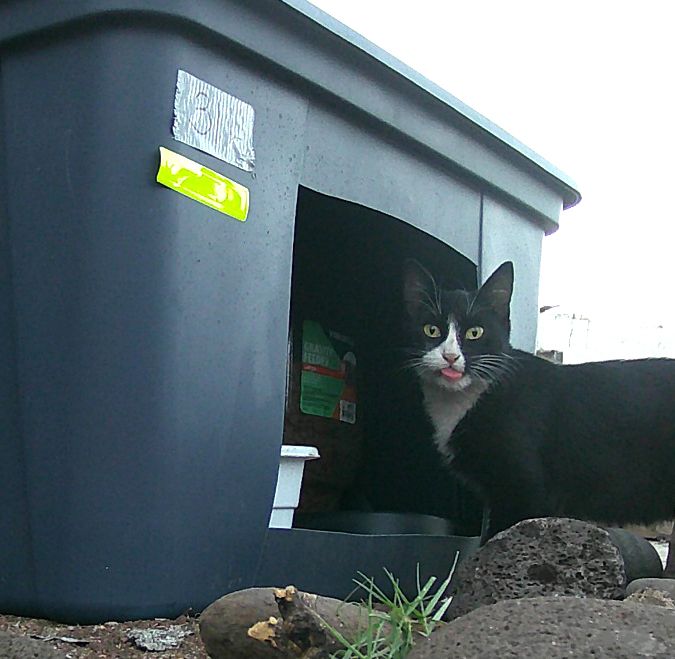
Pick a spot as private as possible - with community cats, out of sight, out of mind is often a good policy. Avoid putting food directly on the ground, but use dishes or plates which can be removed along with any uneaten food. Use a feeding station if you can. This protects the food and water and keeps the site neat. Make one out of a storage bin by cutting a large opening in front, lay a trash can on its side between two cinder blocks, or buy pre-made stations (small or large) from Feralvilla.
Ants, slugs & flies
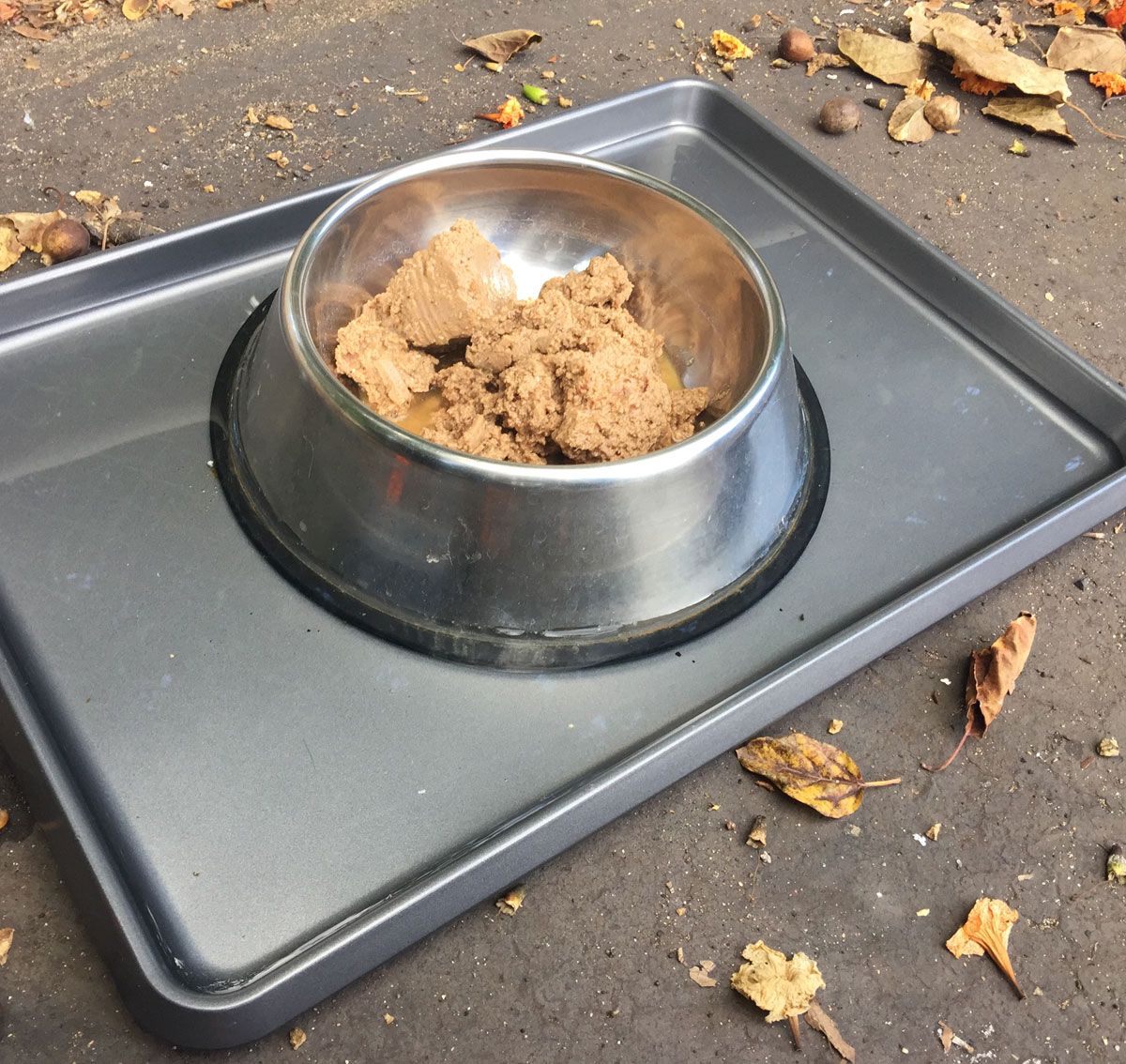
Ants won't cross water so easiest way to keep cat food ant-free is by building a moat. One idea is take a cookie pan or similar, fill it with water and place the bowl in the center (photo). You can also purchase ant-free bowls online. For slugs, draw a circle around the bowl with food grade diatomaceous earth (be careful not to inhale it while spreading). To deter flies, feed at night when they're inactive or else avoid hotter times of the day and don't leave wet food out for long. Otherwise use more dry food which is less attractive to them.
Birds
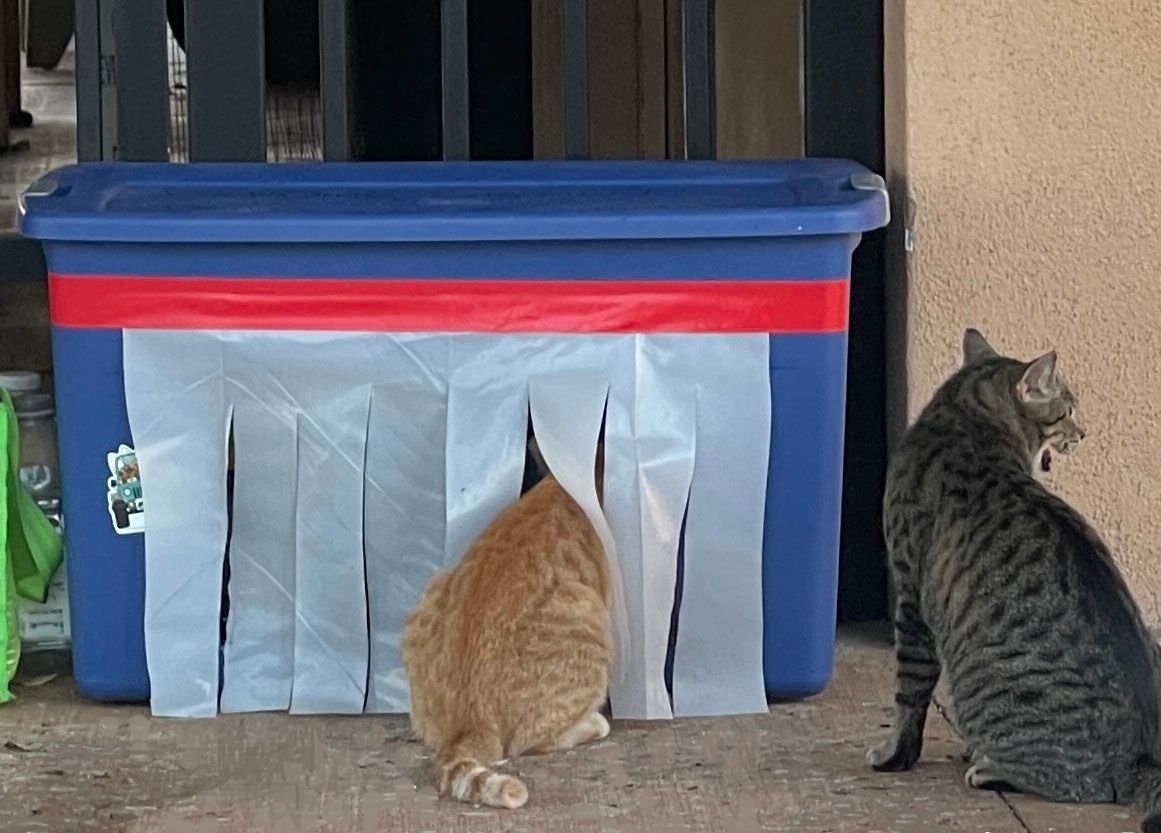
If birds are raiding the cat food, one way to discourage them is to place plastic flaps over the opening of a feeding station. Cats don't mind them the strips but birds will be hesitant to enter. From a plastic drop cloth at least 3mm thick, but a piece the width and height of the station's opening. Leave a lip at the top of the piece and cut strips in the rest. Attach above the opening with all-weather duct tape.
Keeping it clean
Being considerate by removing any trash will promote good community relations and a more accepting attitude towards the cats. On the other hand, having empty cans, lids, plates, paper towels and plastic spoons scattered all around will lead to complaints and hostility. Dumping excessive amounts of food on the ground and leaving it behind also may upset others. So pick up whatever garbage you can, whoever happened to put it there, and for the cats' sake, keep the site clean.