

About
About Us
Learn More
Colony Care
Keeping Cats Out Of Gardens & Yards

Your gift means food, shelter and veterinary care for cats in need.
Working with the neighbors
Keeping the cats out of places they're not welcome is important for maintaining good relations with residents who don't want them around. Cats and caretakers are better off if there's no conflict, so instead of arguing, let the neighbors know you're understanding and offer to help set up deterrents. There are a number of ways to keep cats out of gardens and yards or at least minimize their presence. Be willing to try one approach and, if it doesn't work, try another.
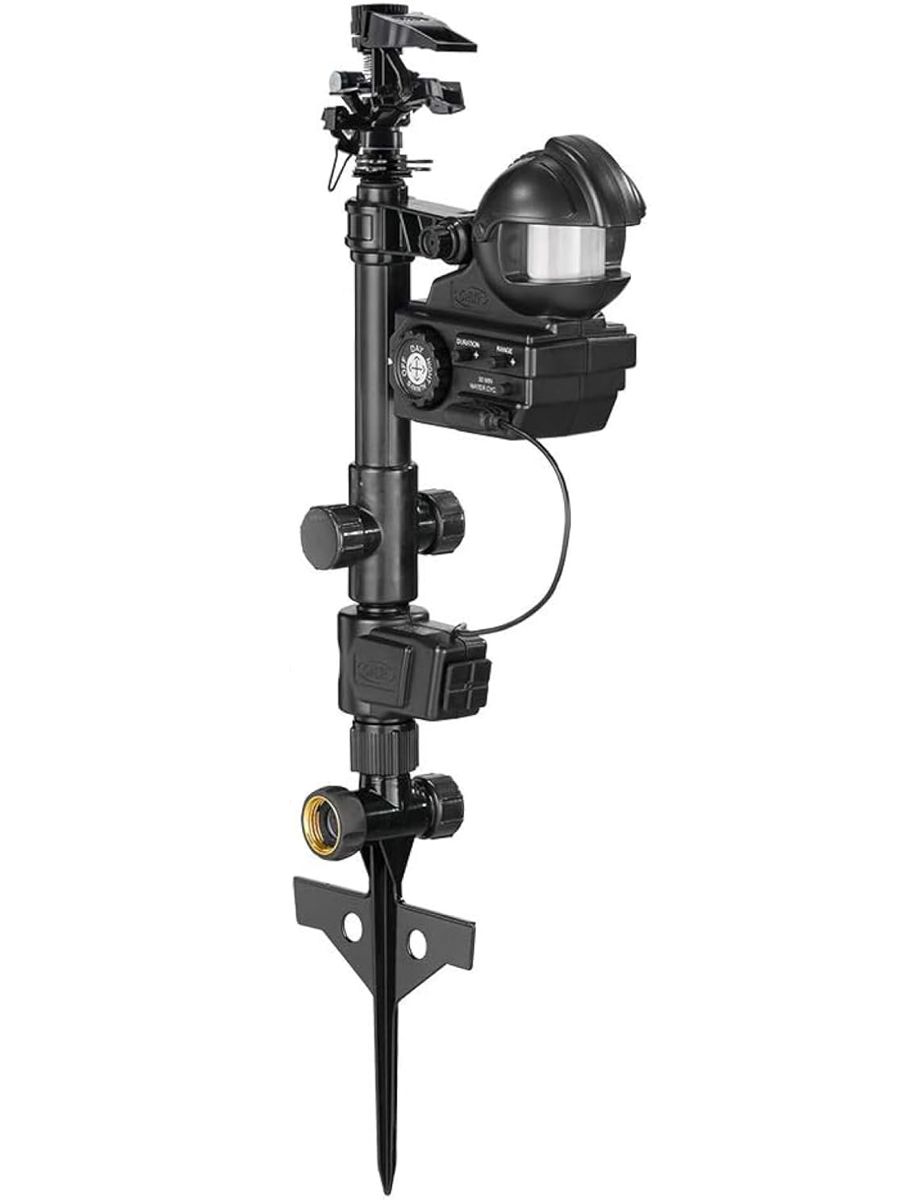
Motion activated sprinklers
These sprinklers emit an infrared field and, when a cat enters, the device shoots out a sudden, startling burst of water. Cats soon learn the boundaries of the field and stay out of it. Batteries, a hose and, if another hose is attached to the spigot, a Y connector are needed. Be sure the range of the device you purchase is large enough for your purposes. Also keep in mind, if you're in a cold climate, a sprinkler might not work in freezing temperatures, so introduce it in warmer weather. Models include:
- Orbit 62100 Yard Enforcer (photo)
- Mospriflix Motion Activated Sprinkler
- TRURID Motion Activated Sprinkler (solar powered)
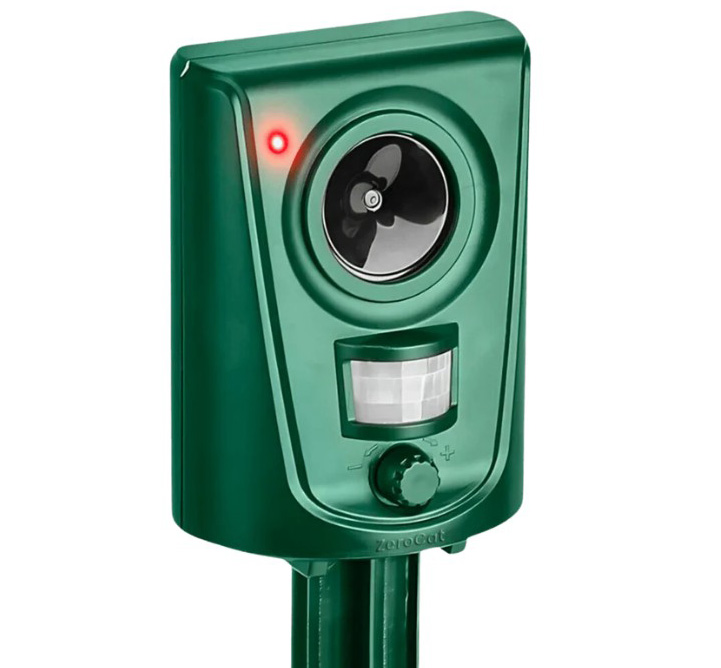
Ultrasonic devices
These deterrents emit an infrared field and, when a cat is detected, sound a high frequency alarm imperceptible to people but highly annoying to cats. Most cats leave right away though it can take a week or two before the more stubborn ones get sufficiently irritated. The sound waves don't penetrate physical barriers like walls or fences. Correct placement is essential, so review our guide, How to Use an Ultrasonic Cat Deterrent. Models include:
- ZeroCat Repellant by Sonic Barrier (photo)
- Smartify Creation Eco Animal Repeller
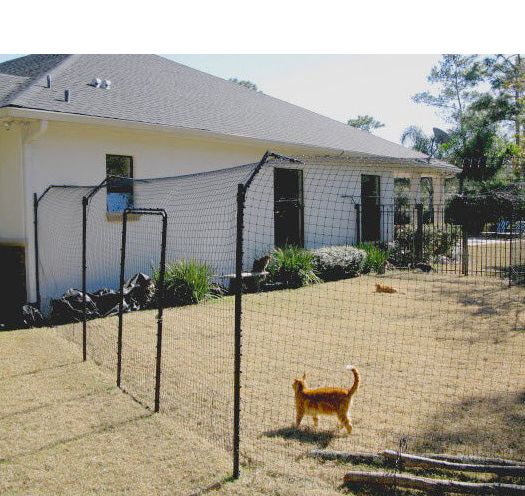
Cat-proof fencing
Cat-proof fencing is marketed to contain cats, but can be used to keep them out of a yard by facing the slanted top in the other, outward direction. It can be installed as free-standing or as an attachment to the top of an existing fence. While relatively costly, it is highly effective. Manufacturers include:
- Purrfect Fence (photo)
- Easy Pet Fence
- ProtectaPet (United Kingdom and Europe)
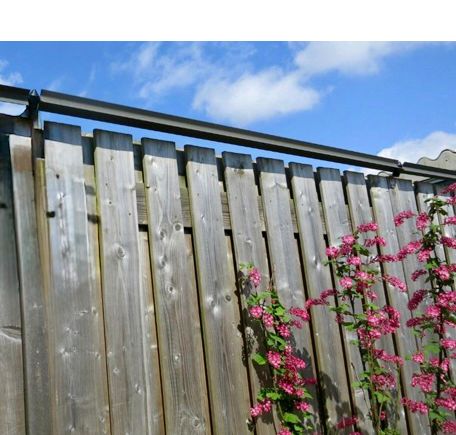
Oscillot Cat Containment System
The Oscillot system consists of roll bars ("paddles") installed on top of existing fences. When a cat tries to jump up and over the fence, the paddle spins upon contact, forcing kitty to drop safely back to the ground. While intended to keep cats in, it can also be mounted on the top or outside of fences to keep them out. Note the system may not work during winter in cold climates if the paddles get wet and freeze. Distributors are found in both North America and Australia.
See in actionopens in a new window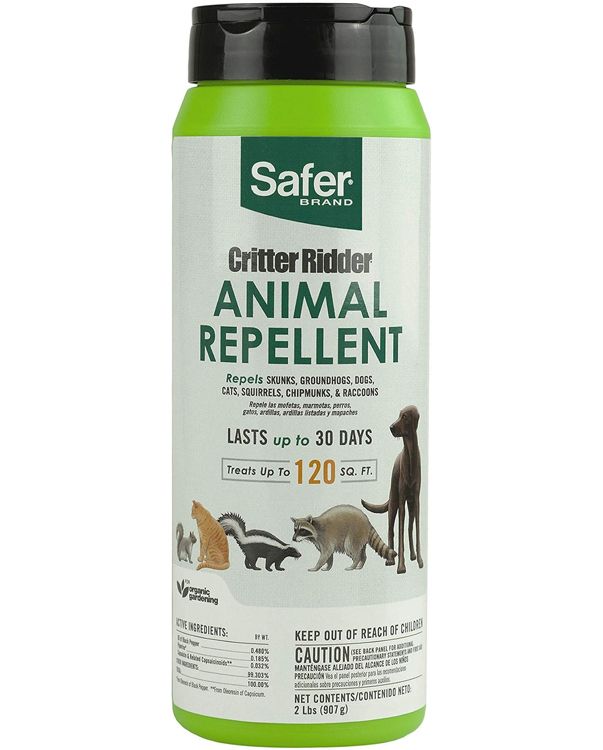
Scent repellents
Scent repellents are probably best used to protect small areas like gardens or certain plants and should be applied around the edges. After it rains, they may need to be re-applied. Natural products include:
- Critter Ridder Animal Repellent Granules (black pepper, capsaicin & piperine)
- Natural Armor All-Natural Animal Repellent (peppermint)
- Common household items such as orange and lemon peels, cayenne pepper, coffee grounds, pipe tobacco and oils like lavender, lemon grass, citronella, peppermint, eucalyptus or mustard.
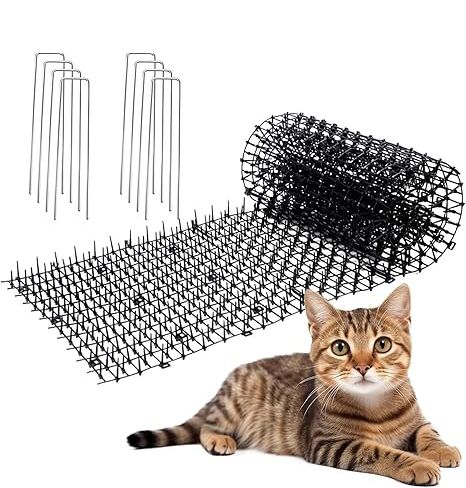
Barriers to digging
Cats love to dig. By making it difficult for them to do so, you can discourage them from using your garden as a litter box or play area. Ideas include:
- Cat scat mat (photo) - these are made up of rows of short plastic spikes which, when the mat is placed on the ground, point upwards. They don't harm the cat but make digging just about impossible. A roll can be cut to size. Also available at Gardener's Supply.
- Rocks, especially with rough surfaces, to cover exposed ground.
- Diamond lattice - press a panel into the ground prior to planting and then put seeds and plants in the openings.

Alternative litter box
One way to keep cats from using your garden or yard as a litter box is to give them somewhere else they'd like more to go, somewhere out of the way and easy to clean. Options include:
- A pile of peat moss in the corner of the yard. Replace as needed.
- A small plastic sandbox filled with play sand.
- A large storage bin converted to a litter box - cut a 7 in. x 7 in. opening in a short side of the bin, leaving the bottom of the opening several inches above the bottom of the bin. Fill the bin up to the doorway with play sand or inexpensive litter.