

About
About Us
Learn More
Trapping
Drop Traps

Your gift means food, shelter and veterinary care for cats in need.
A Trapper's Best Friend!
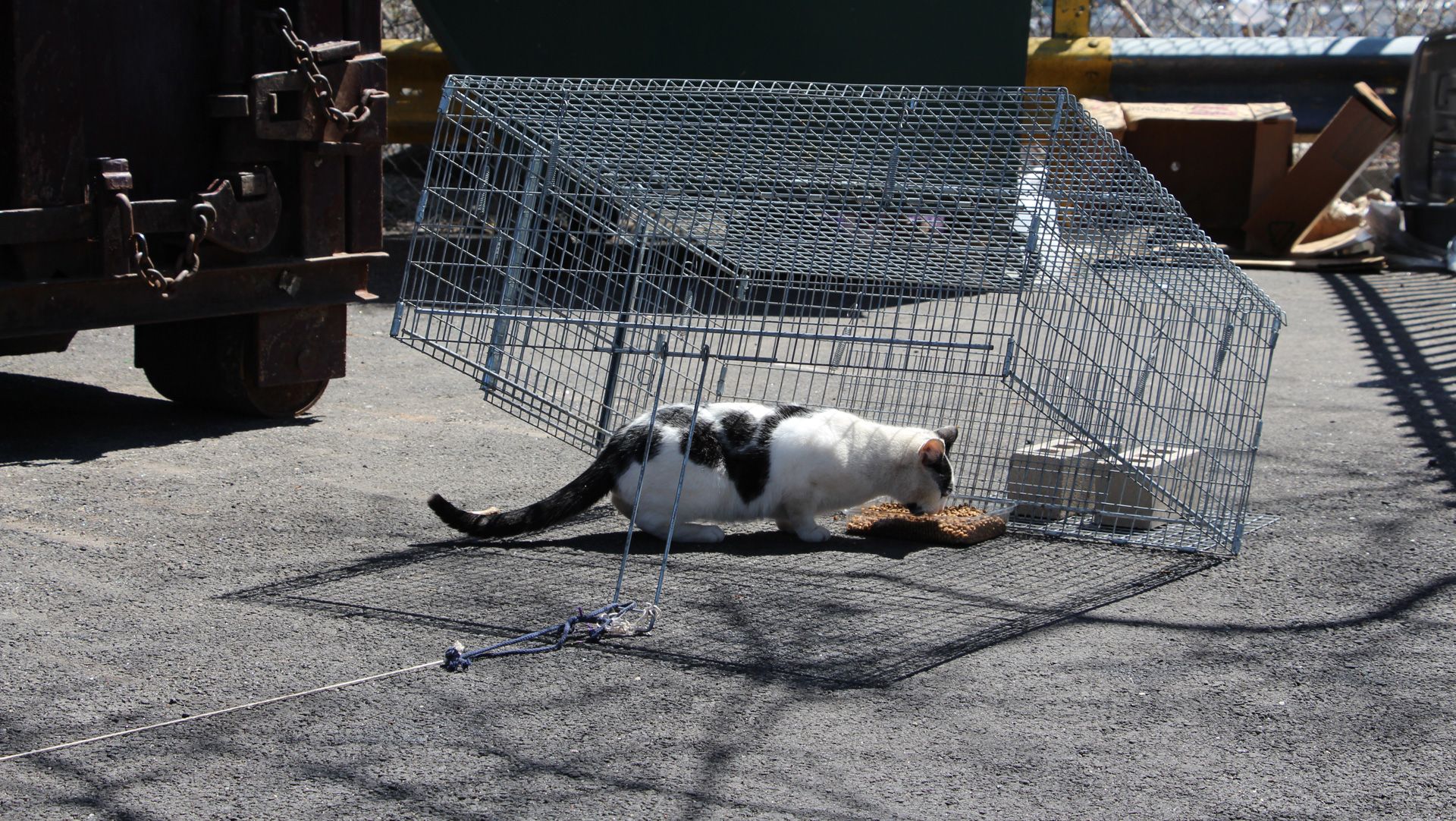
The drop trap Is a favorite tool of many experienced trappers. Cats are not as wary of going under a drop trap as they are of going into a regular trap. This makes it possible to capture cats who are otherwise hard to catch. The drop trap is also effective when you're after one particular cat but not others, such as the last unfixed cat in your colony, a newcomer, an injured cat or a young kitten. Other uses include catching a mom and her kittens at the same time or multiple cats at once. In the video below, see the drop trap in action as we target a newly arrived pregnant female (the black cat on the fence.)
How to Use a Drop Trap
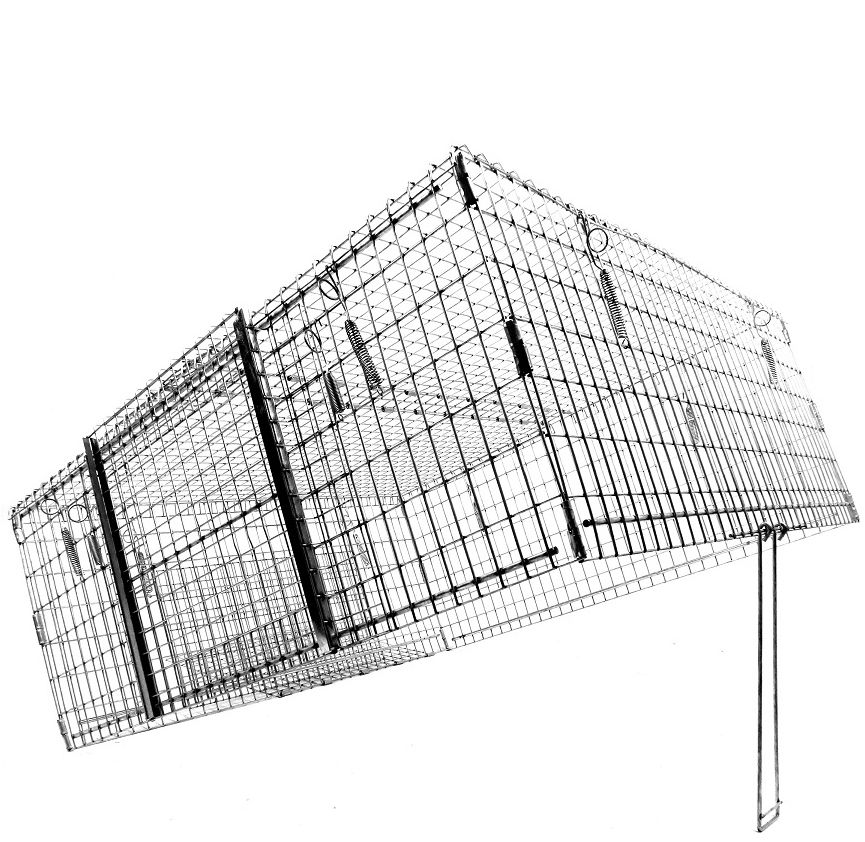
Neighborhood Cats teamed up with Tomahawk Live Trap to design the first commercially available drop trap. It's 36 inches square and folds flat for easy storage and transport. Tomahawk offers a video on how to unfold and assemble the trap. Learn how to use a drop trap by watching our webinar, The Drop Trap: A Trapper's Best Friend, hosted by the Community Cats Podcast. The first half of the presentation goes over the basics, while the second half covers advanced techniques.
Buy Nowopens in a new window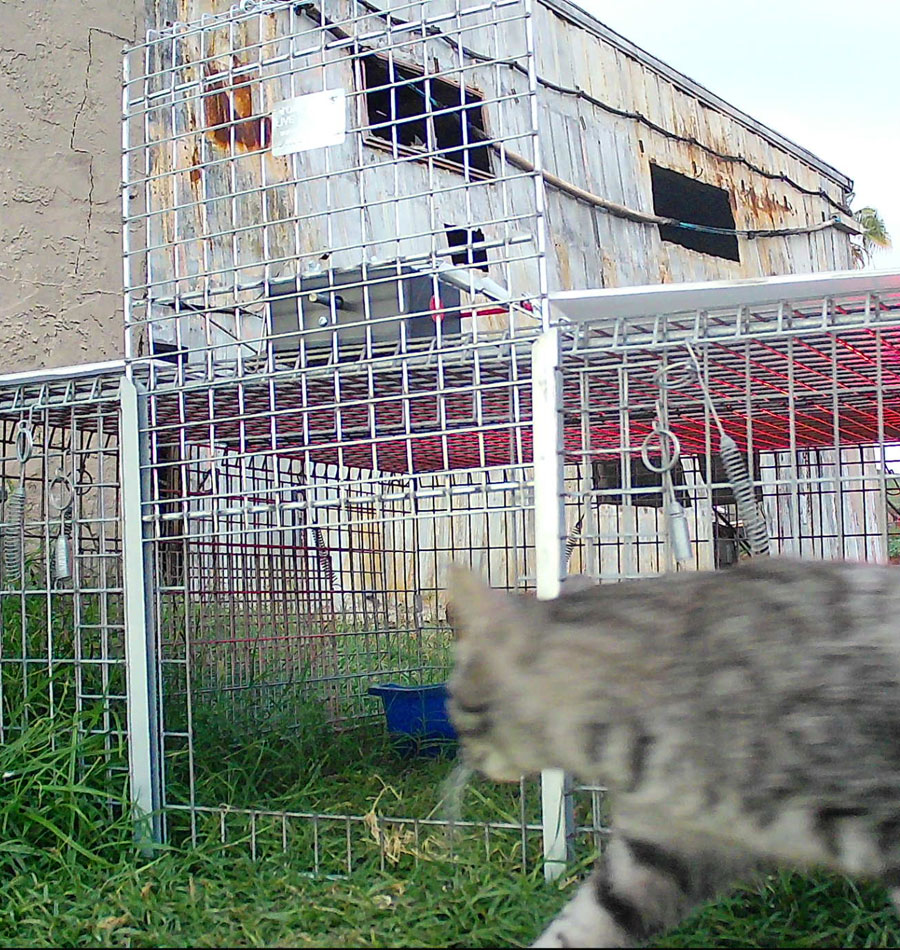
Accessories
A side door opening reducer eliminates any space a cat can squeeze out of during the transfer into a box trap. While a remote control can be used to drop the trap instead of a string, we recommend only using a remote on the side door with the drop trap flat on the ground (photo). To do this you'll need a special bracket to hold the remote. For string, best is braided dacron polyester, 1/4 inch or 5/16 inch thickness. Other accessories include large trap dividers for directing a reluctant trapped cat into a box trap. Learn more about using these accessories in our drop trap webinar.
The Auto-Drop Trap
Following the wildfire that destroyed the port town of Lahaina on the island of Maui, Neighborhood Cats led the rescue of hundreds of surviving cats. When we were down to the last four dozen, who had eluded us for months, we were running out of time and had to figure some way to catch them. By that time, we had been using drop traps as feeding stations and would position a trapper with a remote control trigger to drop the side door when a cat went in to eat. But these last cats were too smart - they wouldn't show up if a trapper was in the area, but would wait it out until they left. To overcome this, we invented what we call the "auto-drop trap." We added a trip plate inside the drop trap and when a cat stepped on it, the raised side door fell down and closed. In less than a month, we had all the remaining cats out of the burn zone. See the video below for a demo of the auto-drop and download the do-it-yourself instructions if you'd like to build your own.