
About
About Us
Learn More
Trapping
Hard-to-Catch Cats

Your gift means food, shelter and veterinary care for cats in need.
Getting to 100%
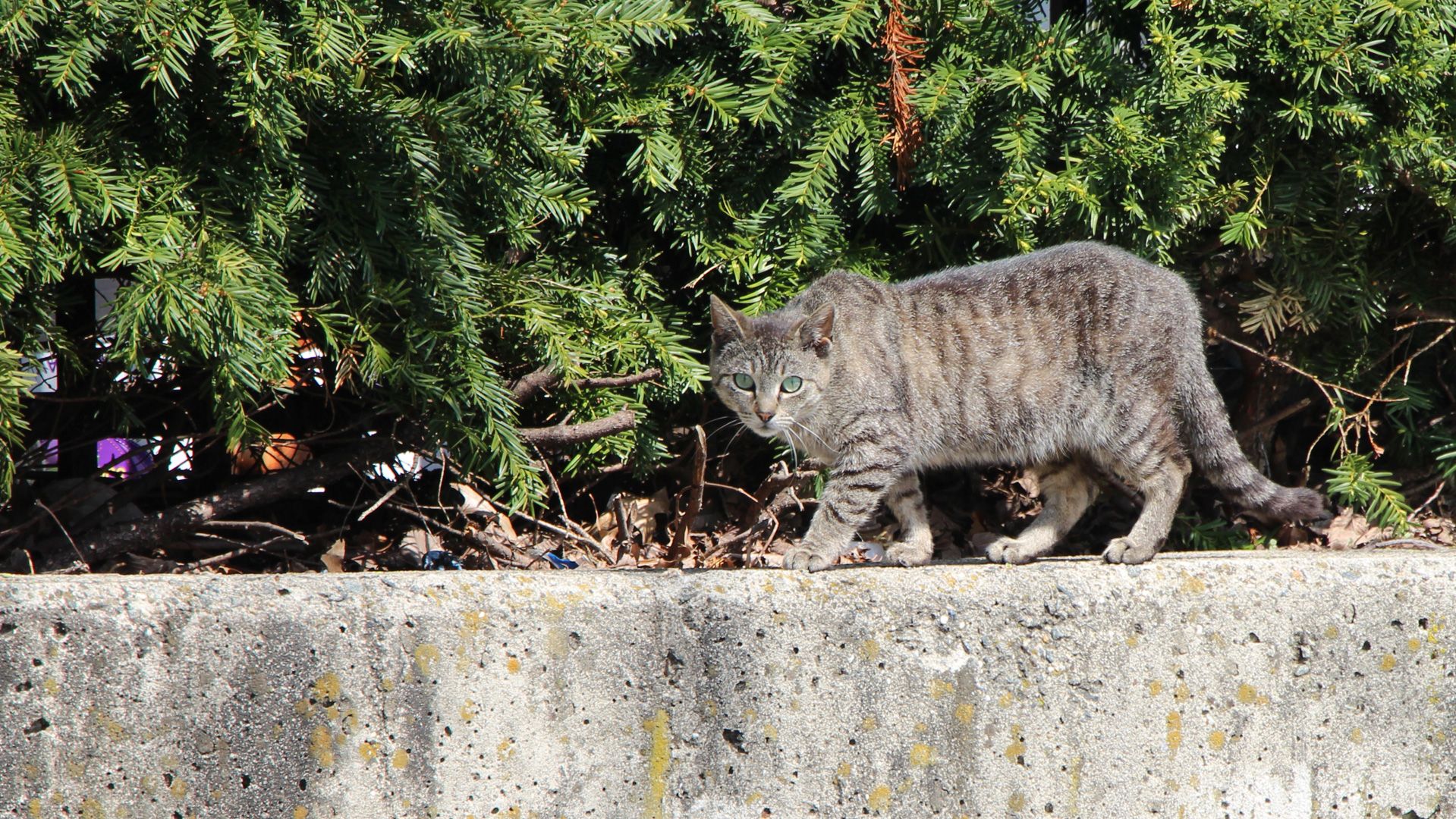
The goal for TNR is to spay or neuter every cat in the colony, but it seems there's always one who just won't cooperate when you put out your traps. She may be especially wily and sense something is not right, or extra timid and cautious about approaching anything new. She simply won't go into the trap no matter how long you withhold food or how much you spend on roasted chicken, mackerel, sardines, rare roast beef, Wendy's burgers or solid white tuna. Or perhaps you're after a cat you trapped before and need to catch again but they remember what happened the last time. Don't despair! Try one of our tried and true hard-to-catch cat techniques.
Drop Trap
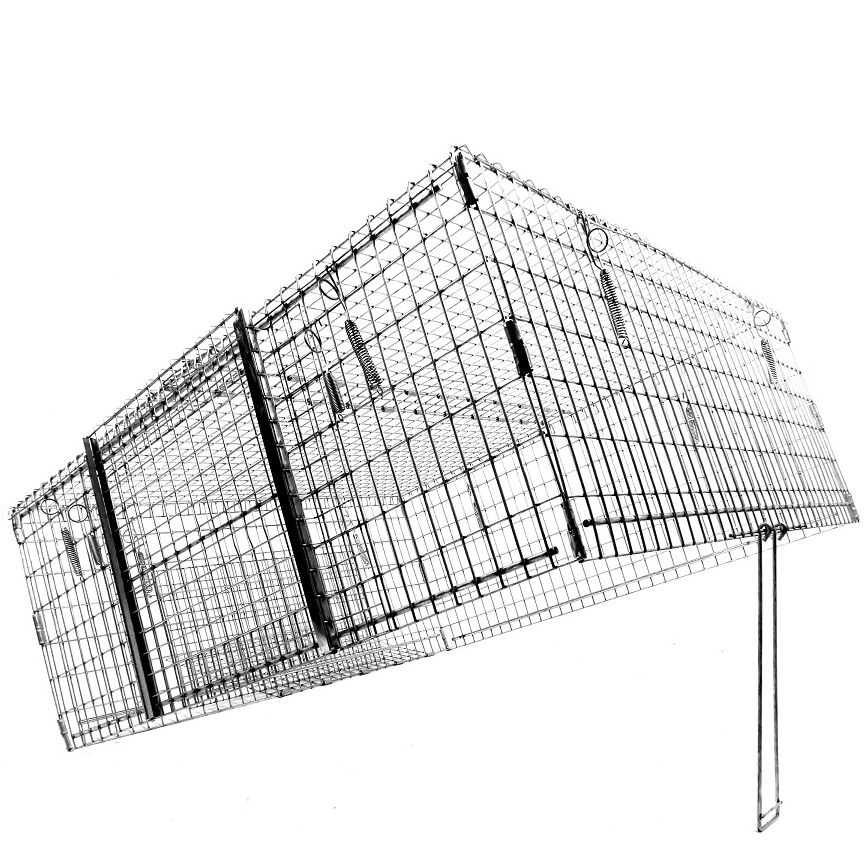
A drop trap is propped up in front. To reach the bait bowl in the back, a cat goes under. When she's in the correct position, the trapper pulls a string and the trap falls over her. She's then transferred out through a side door into a regular trap or transfer cage. Cats in general are not nearly as fearful of going under a drop trap as they are going into a normal trap, making it ideal for difficult cats.
Learn more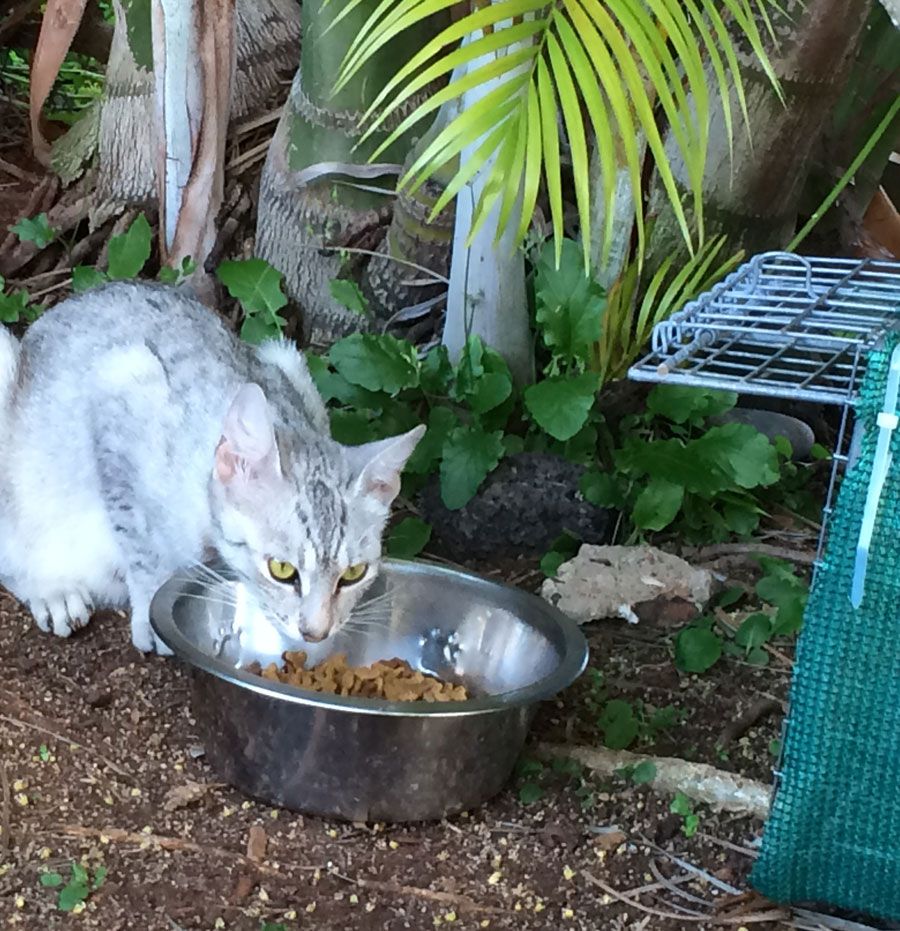
Trap Training
Train a cat to go into a trap by gradually moving her food dish closer to the trap, than inside it. Tie the front door of the trap into an open position. Then place the trap near the cat's usual feeding spot - close enough for the cat to see it but far enough away not to be a threat. After the cat is eating comfortably for a couple of days, move the dish a foot or so closer. Repeat theses steps until she's eating right in front of the trap, then just inside the door, etc., until she's going all the way in. Then you can set the trigger.

"Kill Squeak"
This product, which fits in the palm of your hand, emits an intermittent sound of rodents squeaking. It's barely audible to humans, but easily heard by predators like cats. Place it in the back of the trap behind the trip plate - no other bait is needed. Cats go in, trying to find the source of the sound. Available on Amazon.
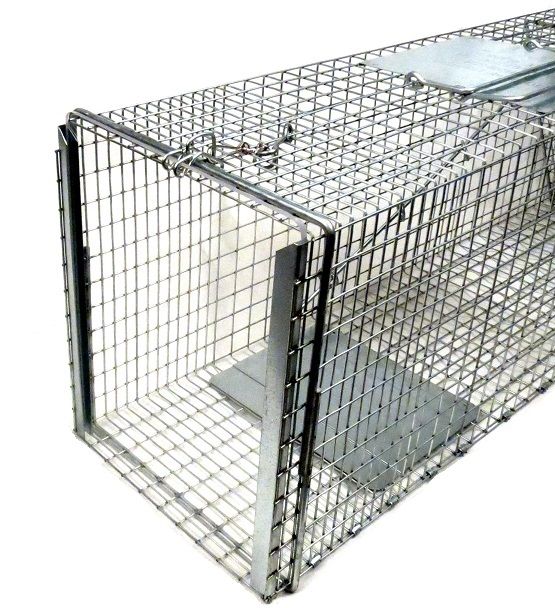
Clear Rear Door
Sometimes cats won't enter a trap because they see there's only one way in and out. You can trick them by replacing the wire mesh rear door with one made of transparent plexi-glass. Clear rear doors can be purchased for most cat traps manufactured by Tomahawk Live Trap (search for your size trap or call them). Be careful, however. Trapped cats may keep trying to get out through the rear of the trap, risking injury. It's best to use this when you're within sight of the trap and can quickly cover it upon a cat being captured.
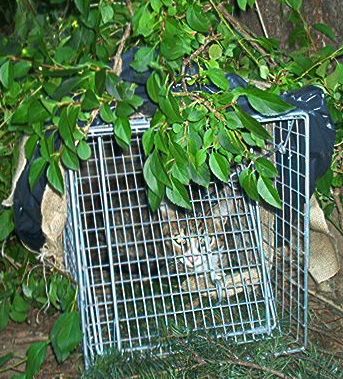
Camoflauge
The more a trap seems like part of a cat's normal environment, the more likely he'll venture in. To camoflauge a trap in a natural setting, cover the sides of the trap with burlap and pile leaves, sticks and natural debris over it. Or wrap the trap in green shade cloth (meant for plants and gardens).
In an urban area, put the trap inside a cardboard box, like the one it was shipped in. Or put the trap in a contractor bag - cut an opening for the rear door and use duct tape to secure the bag around the trap. Whatever setting you're in, position the disguised trap by a permanent fixture, like under a bush or next to a fence.
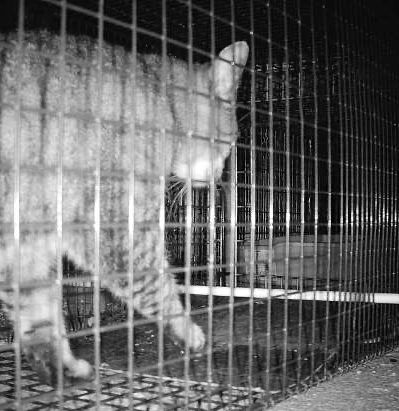
Hide the Trip Plate
Some cats are smart and know not to step on the trip plate, but go over or around it instead. To prevent this, try covering the plate with newspaper secured with clothes pins or a trap mat. If that doesn't work, also slide a dowel through the sides of the trap in front of the trip plate (photo). This forces the cat to step over the dowel and onto the hidden plate.
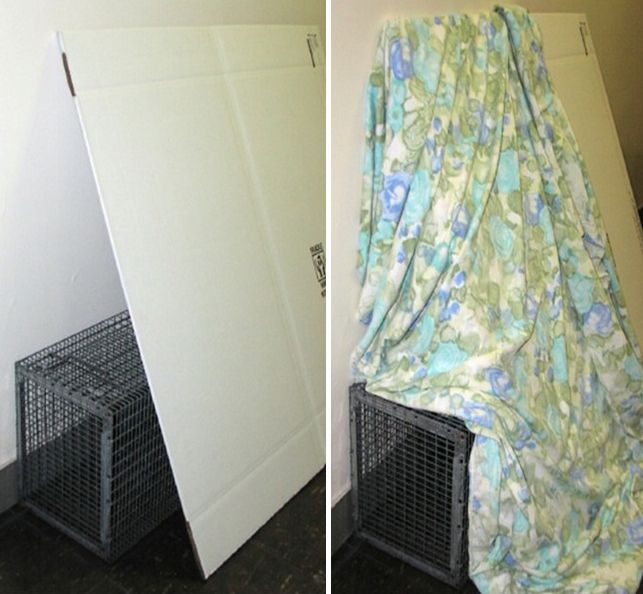
Lure Indoors
Lure your target cat inside where you can shut the door behind him. To then get him into a trap, leave him where he's hiding and eliminate all other potential hiding spots. Next, lean a large board or the equivalent against a wall and place a set trap behind it. Using blankets or sheets, visually block off the open space above both ends of the trap. Gently flush the cat out of his hiding place and let him run to the only safe spot he'll see - behind the board and into the trap.
Looking for more ideas? Check out our free Trapper Tips & Tricks webinar hosted by Community Cats Central: