
About
About Us
Learn More
Getting Started
What is a Feral Cat?

Your gift means food, shelter and veterinary care for cats in need.
The meaning of feral
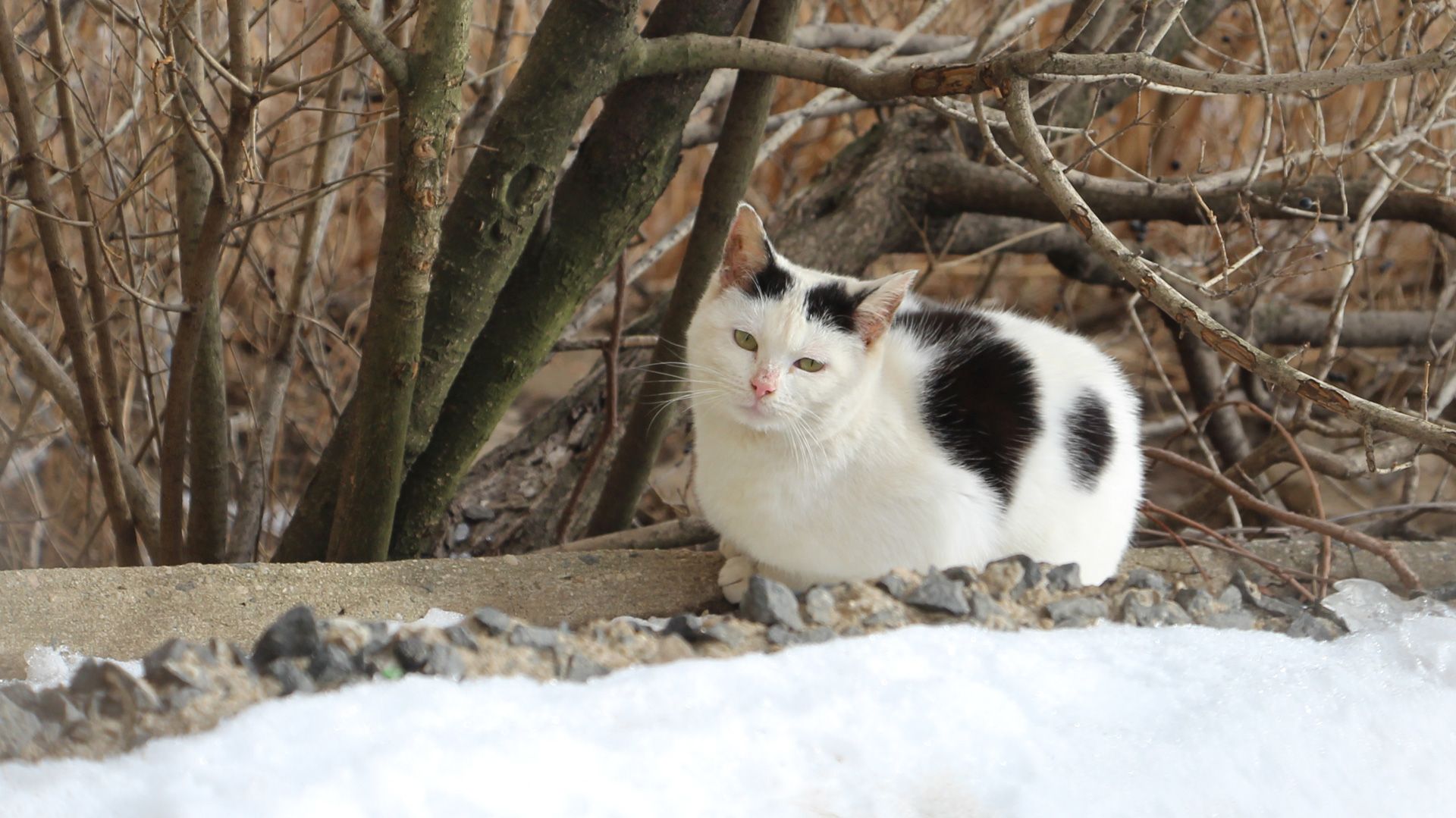
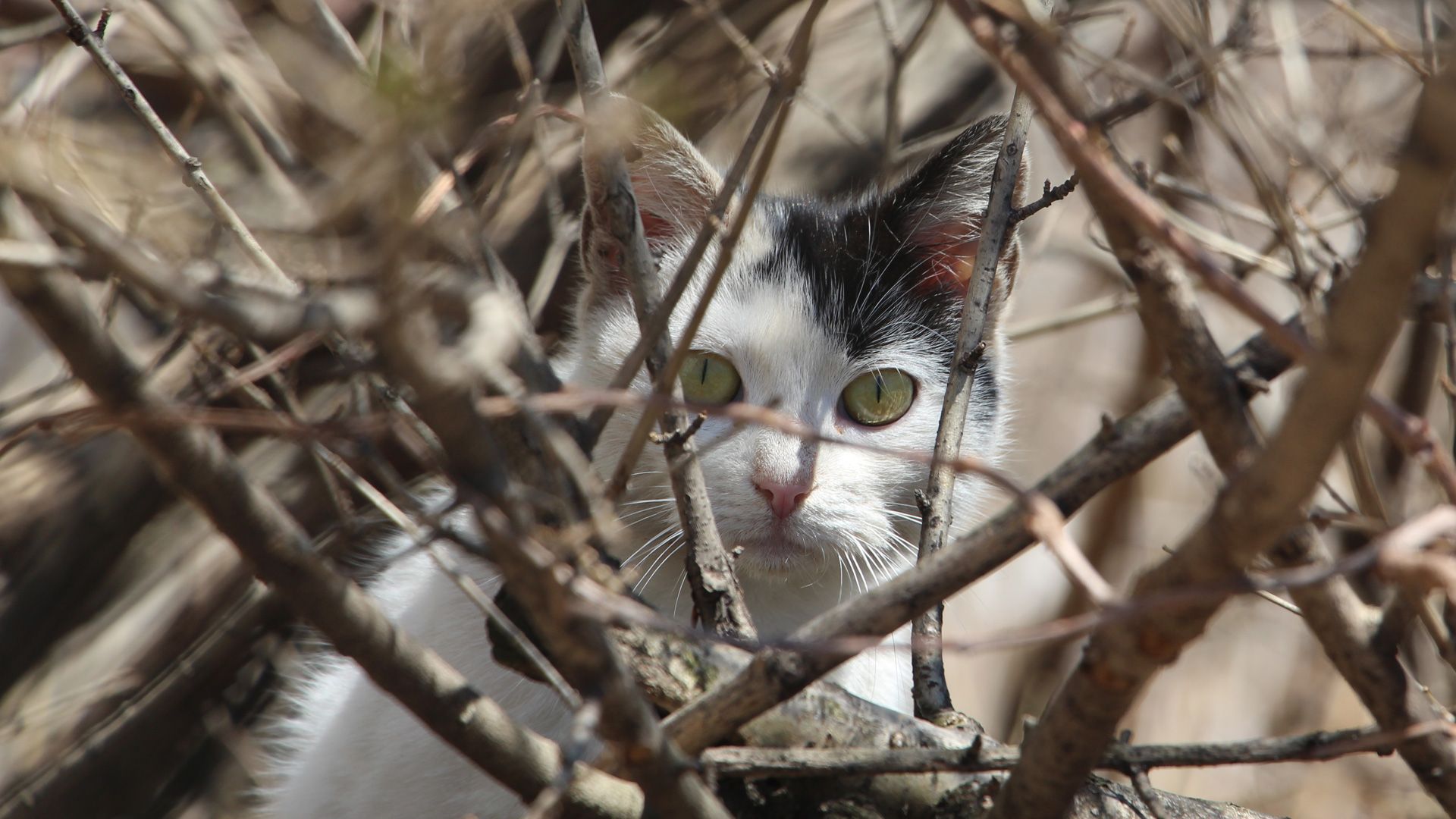
A feral cat is unsocialized and tends to be fearful of people and keep a distance. With some exceptions, such as in the Outback in Australia or the forests of Kauai, the vast majority rely on human-based food sources for at least some of their sustenance. Often feral cats will form a colony, a group of cats who share a common food source and territory. A colony can also include cats who are friendly and may have been lost or abandoned.
"Feral" is a behavioral description. There is no sub-species or biological category called "feral cats." Because the term feral describes behavior, not biology, it's possible for the same cat to be feral at one stage in her life and become socialized and non-feral at another. Cats can also be feral to different degrees, ranging from mildly to extremely fearful.
How feral?
The degree to which a cat is feral will depend primarily on four factors:
- Age - Feral kittens eight weeks old or less can typically, though not always, be quickly socialized. Beyond that age, with each passing week socialization becomes a longer and more uncertain process. The older a kitten is when socialization begins, the more likely he'll retain at least some feral characteristics for the rest of his life, such as fear of strangers or change. Adult feral cats may or may not ever tame, and if they do, the process can take years.
- Ancestry - With each successive feral generation, the degree to which kittens are fearful of people tends to increase.
- Human contact - Cats who regularly interact with people are likely to show more signs of socialization than those who have little or no contact.
- Personality - Like all sentient beings, cats are individuals with their own personalities. The occasional feral cat, despite being older, descended from multiple generations of ferals and having almost no human contact, is naturally friendly and will quickly warm up to people.
If a cat is feral to a significant degree, then trying to force her to live indoors as a pet or keeping her confined indefinitely in a cage can cause her to be in a constant state of fear. Trap-Neuter-Return respects a feral cat's inner needs by setting her free to live among her own and answer to her own unique nature.
What is a Community Cat?
When TNR was introduced to the United States in the 1990's, cats living outdoors were commonly referred to as ferals. As the field has evolved, it's become clear many of the cats are sociable, not feral. These friendly cats may be lost or abandoned former pets, or may never have been in a traditional home with an owner. The need for a more accurate description of unowned, free-roaming cats led to "community cats." They may be feral, friendly or anything in between. The term "community" also implies there is a collective responsibility for their management and care.